

What Is an LRV?
Light Reflectance Value (LRV) is a measurement that indicates how much visible light a surface reflects. The scale ranges from 0 to 100, where:
- 0 represents pure black, absorbing almost all light.
- 100 represents pure white, reflecting nearly all light.
In practical terms, LRVs help determine the visual contrast between different surfaces and fixtures within an environment.
For people with visual impairments, strong contrast can make the difference between easily identifying key features and struggling to navigate a space safely.
Why Does LRV Matter in Accessible Washrooms?
Many individuals experience reduced contrast sensitivity due to conditions such as:
- Age-related sight loss
- Macular degeneration
- Glaucoma
- Cataracts
- Diabetic retinopathy
Without adequate contrast, essential washroom fixtures can blend into their surroundings, making them difficult to locate and use.
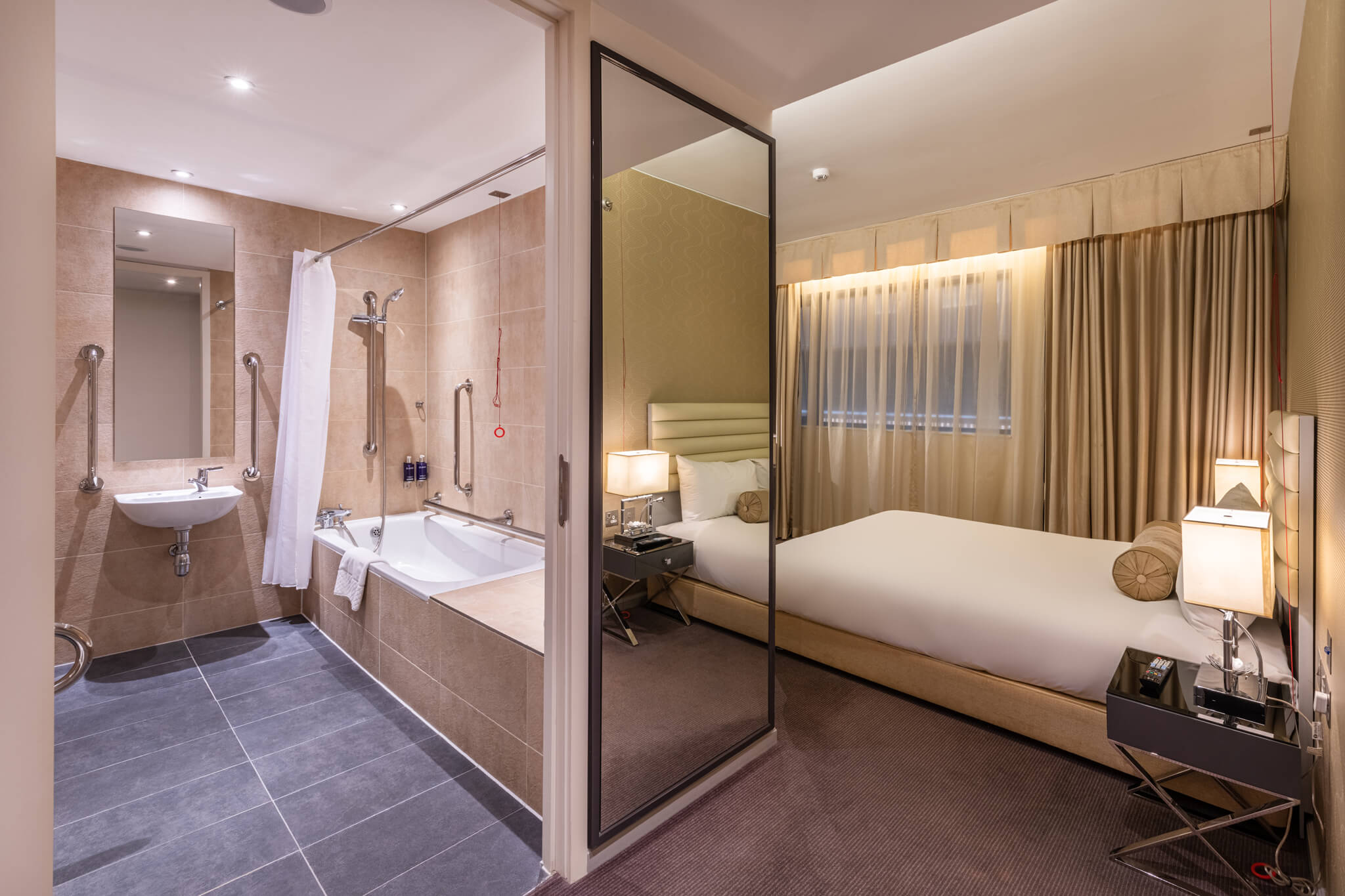
By selecting products and finishes with appropriate LRV differences, designers can ensure that critical elements such as grab rails, wash basins, taps, dispensers, and sanitaryware stand out clearly against surrounding surfaces.
Understanding Visual Contrast Requirements
Within accessible environments, guidance commonly recommends a minimum 30-point difference in LRV between adjacent surfaces to create effective visual contrast.
For example:
|
Surface |
LRV |
|
Wall Finish |
80 |
|
Grab Rail |
50 |
|
Difference |
35 |
In this example, the grab rail is easily distinguishable from the wall, helping users locate and use it confidently.
Conversely:
|
Surface |
LRV |
|
Wall Finish |
80 |
|
Grab Rail |
65 |
|
Difference |
15 |
Here, the contrast may be insufficient, making the rail harder to identify.
Which Key Areas Should LRV Be Applied?
Grab Rails
Grab rails are critical safety features within accessible washrooms. However, their effectiveness depends on users being able to see them clearly.
When selecting rails, consider:
- Contrast against wall finishes
- Consistency throughout the facility
- Visibility under different lighting conditions
Dark-coloured rails often work well against light walls, while lighter rails can provide the necessary contrast against darker finishes. However, the key is to ensure the 30 LRV difference is achieved.
Backrests and Support Equipment
Backrests on accessible WCs and other support equipment should also contrast clearly with surrounding surfaces.
This helps users:
- Identify support features quickly
- Position themselves safely
- Use facilities with greater independence
Wash Basins and Countertops
Basins that visually blend into countertops can become difficult to distinguish, particularly for users with reduced vision.
Designers should aim for contrast between:
- Basin and worktop
- Basin and wall surfaces
- Taps and basin finishes
This creates a clearer visual hierarchy and improves ease of use.
Dispensers and Accessories
Items such as:
- Soap dispensers
- Hand dryers
- Toilet roll holders
- Paper towel dispensers
should all be visible against the surfaces on which they are mounted.
Accessories are often chosen purely for aesthetic reasons, but applying LRV principles ensures they remain functional for all users.
Doors and Ironmongery
Accessible washroom doors should be easy to identify, particularly in larger public buildings.
Consider contrast between:
- Door leaf and surrounding wall
- Door frame and wall
- Handles and door surface
These contrast differences help users recognise entrances and operate doors more easily.
Balancing Accessibility and Aesthetics
A common misconception is that accessible design limits aesthetic choices. In reality, thoughtful use of LRVs can enhance both functionality and visual appeal. Fitzroy strives to ensure design-led bathrooms and washrooms are created for all.
Modern washroom products are available in a wide range of colours and finishes, enabling designers to create contemporary spaces while maintaining compliance and usability.
For example:
- Matt black grab rails against pale walls
- Anthracite accessories within light washrooms
- White sanitaryware set against darker wall panels
These combinations offer strong visual contrast while supporting modern interior design schemes.
The Role of Product Selection
Selecting products with published LRV data simplifies the design process and reduces uncertainty during specification.
Manufacturers that provide clear technical information allow architects, contractors, and accessibility consultants to:
- Calculate contrast levels accurately
- Demonstrate compliance requirements
- Deliver more inclusive environments
When specifying washroom equipment, it is worth considering not only performance and durability but also how visible products will be within the completed space.
Practical Finish Combinations for Accessible Washrooms
Applying LRV principles doesn't mean compromising on design. In fact, many of Fitzroy of London's most popular finishes can be used to create contemporary washrooms that deliver both strong visual contrast and excellent accessibility. For example:
- Matt Black grab rails and accessories provide excellent contrast against white, cream, or other light-coloured wall finishes, making key support features easy to identify.
- Anthracite Grey finishes work particularly well within light-toned washrooms, offering a softer contemporary aesthetic while still achieving clear visual distinction from surrounding surfaces.
- White sanitaryware and support equipment stand out effectively against darker wall panels, coloured splash backs, or contrasting vanity units, helping users quickly identify essential fixtures.
- Brushed Stainless Steel products can perform well when specified against darker wall finishes, creating a clean, modern appearance while maintaining visibility.
- Coloured support rails and accessories can also be selected to complement interior design schemes while achieving the recommended visual contrast levels, allowing accessibility requirements to be integrated seamlessly into the overall aesthetic.
By considering both finish selection and surrounding surface colours at the specification stage, designers can create washrooms that are visually appealing, compliant, and intuitive for all users to navigate.
How Fitzroy of London Can Help?
At Fitzroy of London, we understand that accessibility is about empowering people through thoughtful design. Our range of accessible washroom solutions is developed with both usability and aesthetics in mind, helping specifiers create environments that are inclusive, compliant, and visually appealing.
Whether you're designing a healthcare facility, education setting, commercial building, or public space, considering LRV values during product selection can help ensure your washroom delivers the highest standards of accessibility for every user.
Fitzroy of London’s Inclusive Commercial Washrooms, RIBA-Approved CPD
Whether you’re an architect, designer, manager, specifier or interior designer, book your CPD with us today to explore how high-end design and accessibility can coexist to create beautiful, functional and inclusive washroom spaces.
Where: Online or face-to-face
When: Whenever works for you
Duration: 60 – 90 minutes
Contact us today to learn more or book your CPD session.