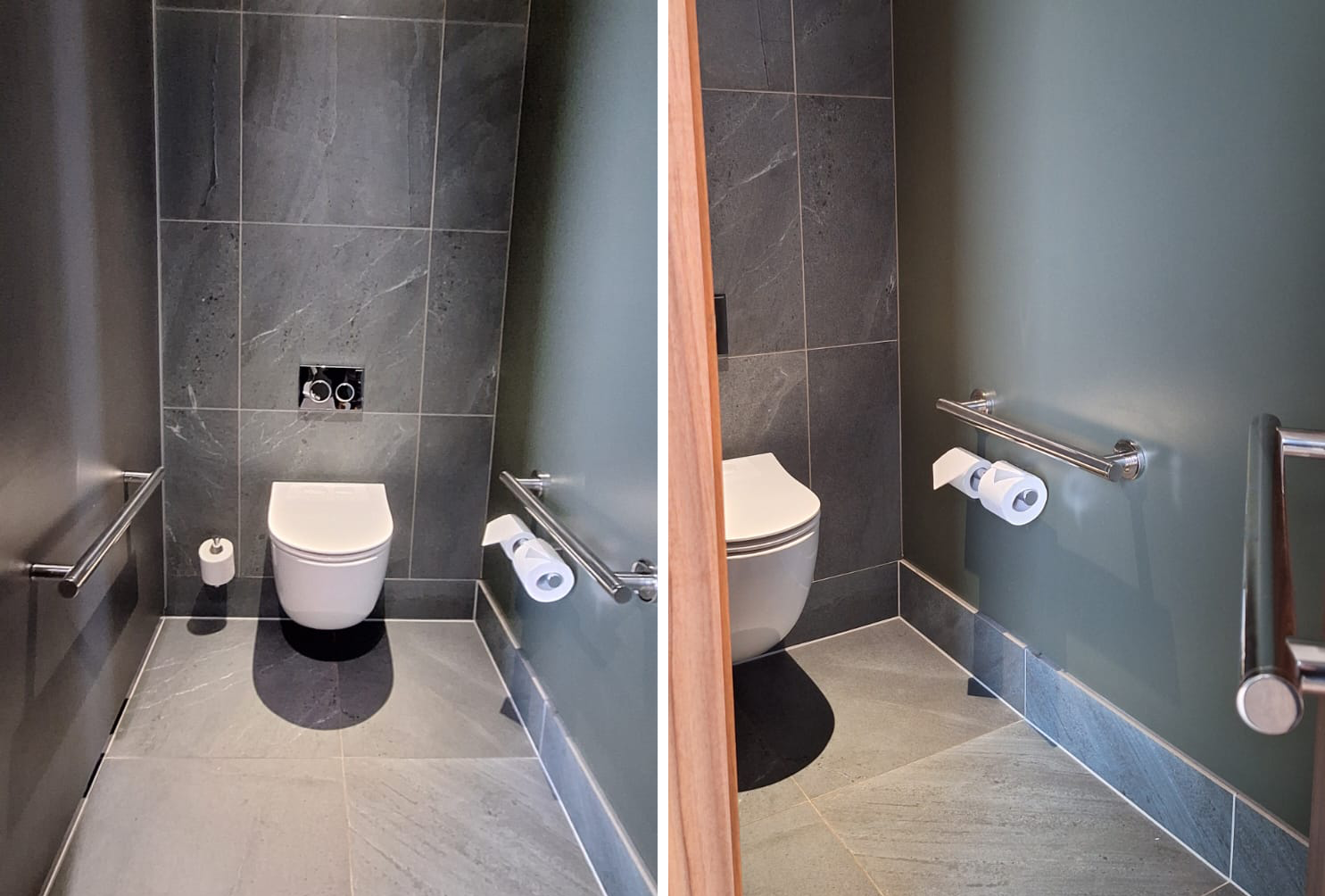


Type A – Fully Enclosed, Self‑Contained Ambulant Universal Toilet
This facility is designed for ambulant users who have limited mobility but do not require a wheelchair. It is fully enclosed and can be used by people of any gender.
Key Features
- Compact but accessible layout
- Support rails positioned on both sides of the WC
- Standard-height toilet pan
- Outward opening or sliding door for ease of access
- Easy-to-operate locks, handles, and controls
- Basin accessible within the cubicle
When to Specify
- Offices and workplaces
- Retail and hospitality environments
- Public buildings with mixed user groups
- As part of inclusive washroom provision
Why It Matters
This type supports users who need additional stability and assistance when using toilet facilities. Including ambulant accessible toilets ensures a broader level of inclusivity beyond wheelchair users.
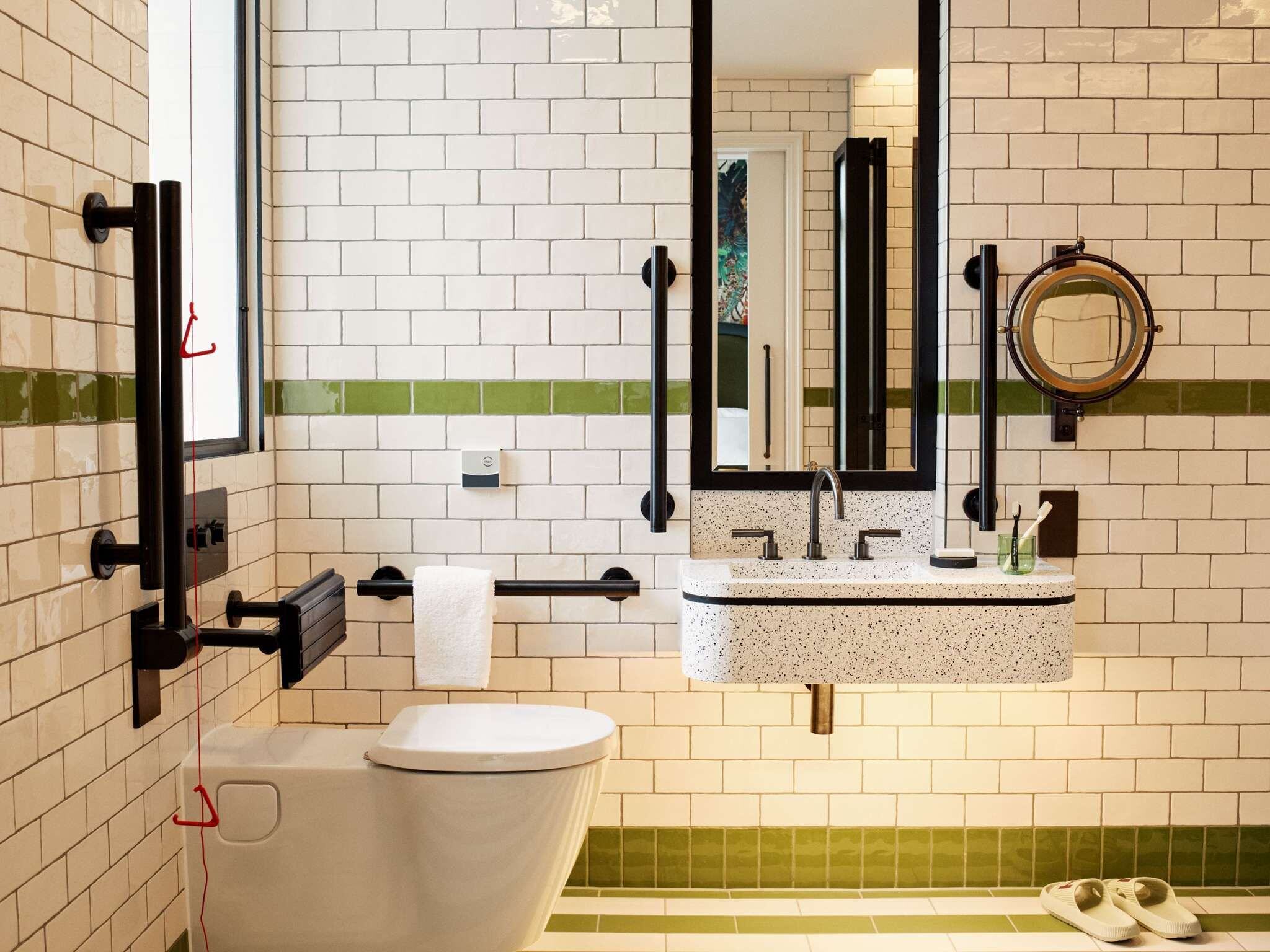
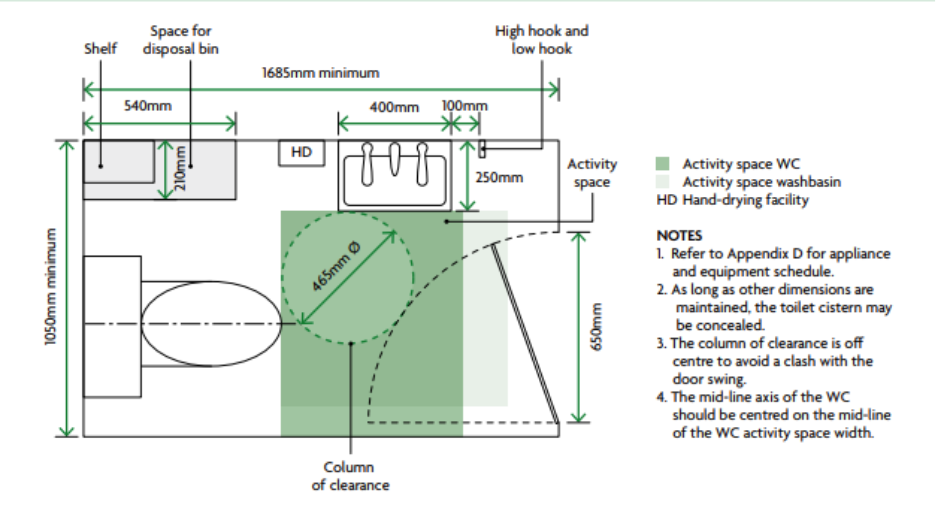
Type B – Fully Enclosed, Self‑Contained Universal Toilet
This is the most common Document T compliant facility and is designed primarily for independent wheelchair users. It provides a fully self-contained, gender-neutral space.
Key Features
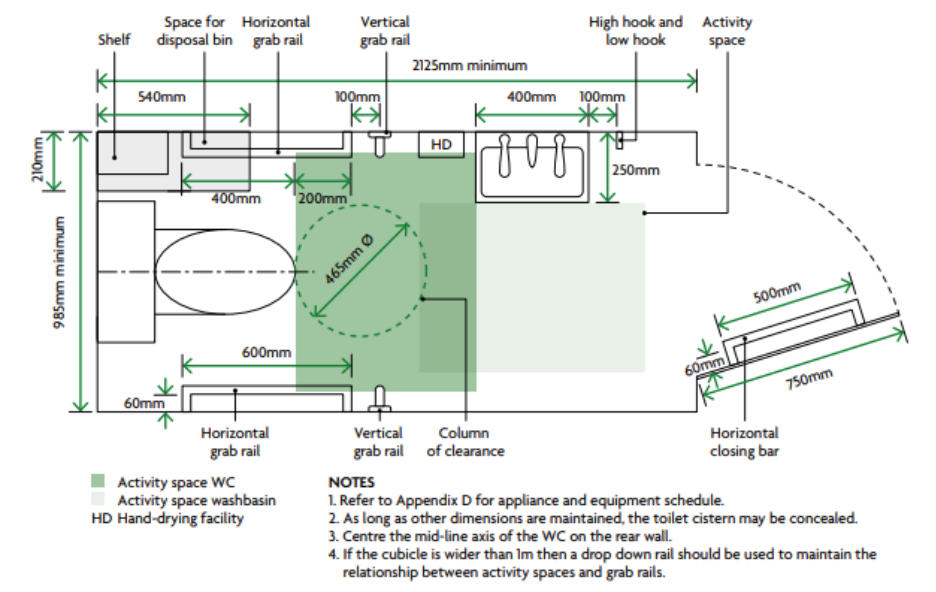
- Defined activity space (typically 600mm deep × 800mm wide)
- Outward opening or sliding door
- Drop-down and fixed grab rails positioned for transfer
- WC layout designed for lateral or angled transfer
- Basin positioned for seated use with lever or sensor taps
- Adequate manoeuvring and turning space
When to Specify
- Offices
- Retail environments
- Hospitality venues
- Public and commercial buildings
Why It Matters
This is a baseline requirement under Document T for most non-domestic buildings. It ensures that wheelchair users can use facilities independently, safely, and with dignity.
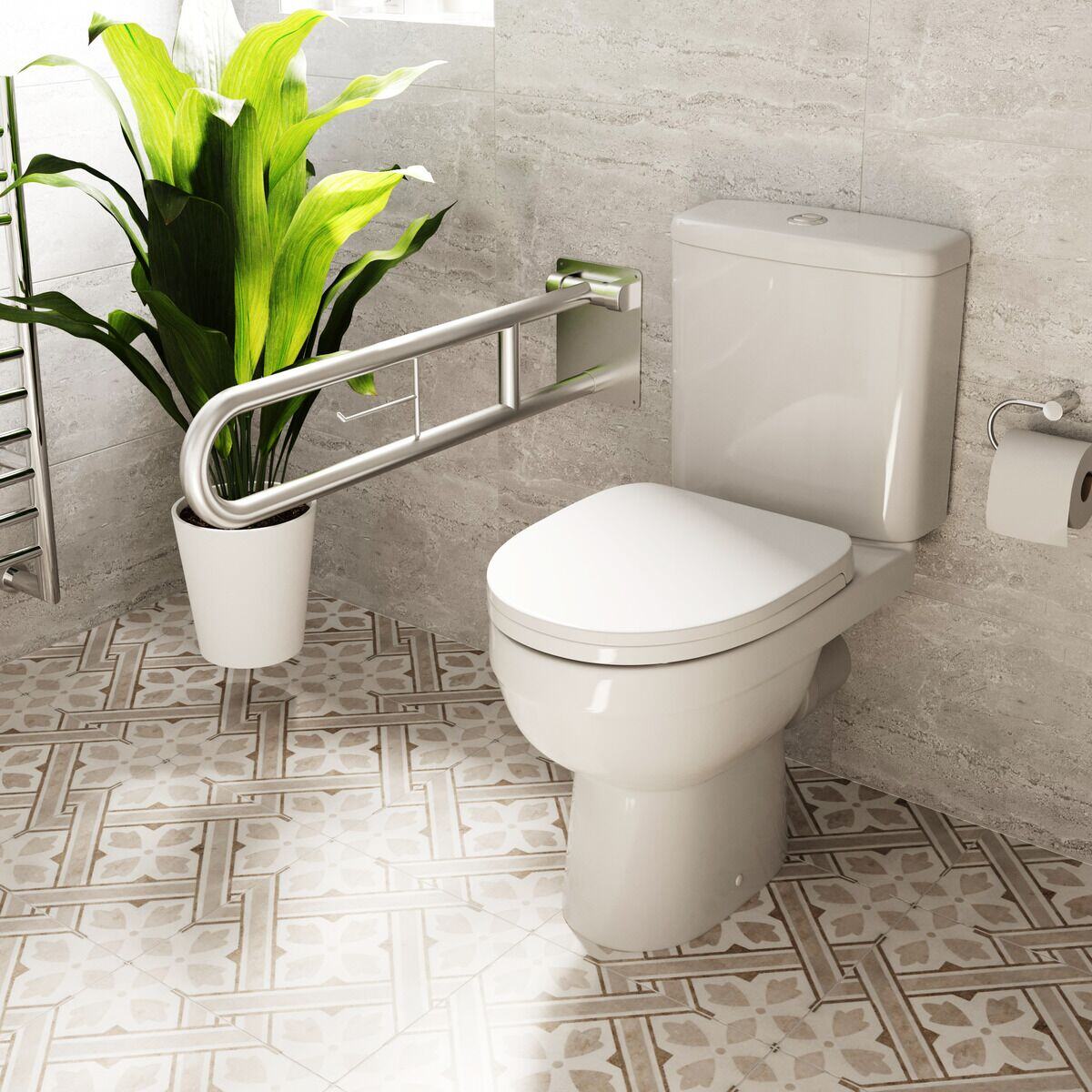
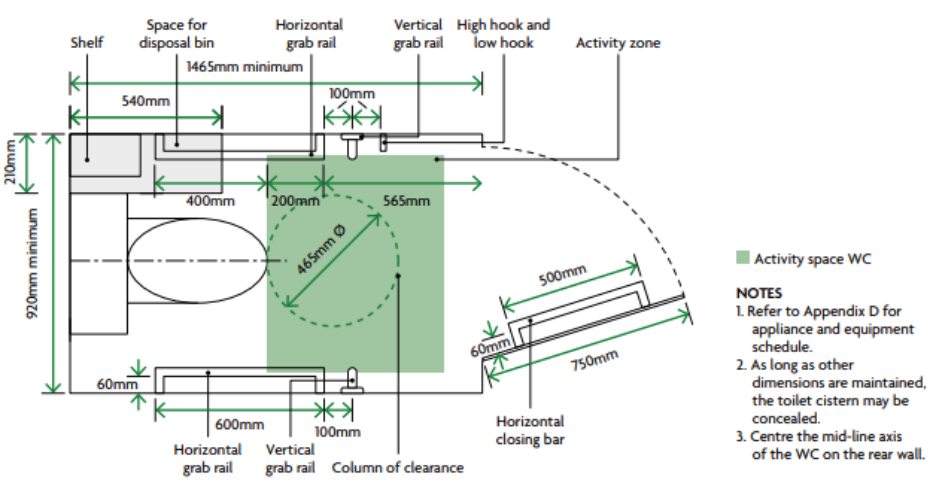
Type C – Ambulant Single‑Sex Toilet Cubicle
This cubicle is located within male or female washrooms and is designed for ambulant users who require additional support but do not need a separate enclosed room.
Key Features
- Larger than a standard cubicle but smaller than a universal accessible toilet
- Horizontal and vertical grab rails on both sides of the WC
- Standard-height toilet pan
- Positioned within single-sex washroom facilities
- Enhanced door hardware for ease of use
When to Specify
- Larger washroom layouts
- High-footfall environments such as airports, shopping centres, and theatres
- Buildings requiring multiple accessible options
Why It Matters
Ambulant users represent a significant proportion of the population. Providing this type ensures accessibility within standard washroom layouts while improving overall compliance and user experience.
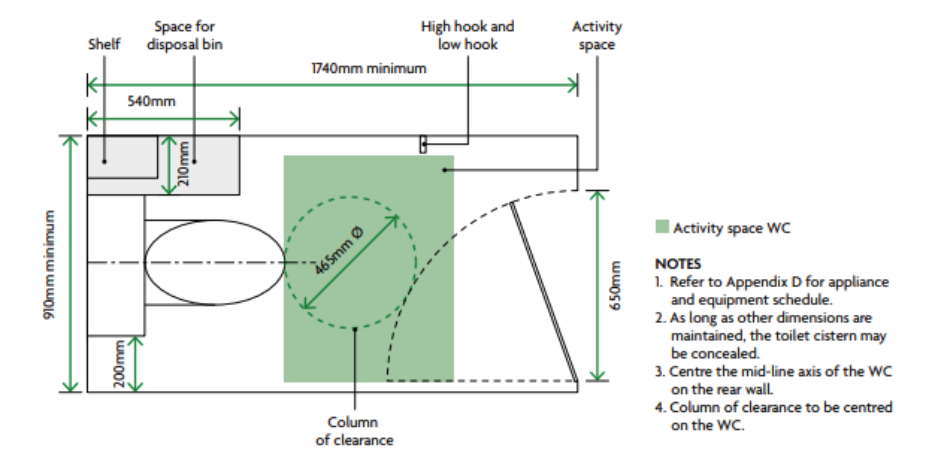
Type D – Standard Single‑Sex Toilet Cubicle
This is a conventional toilet cubicle located within male or female washrooms and designed for general use without additional accessibility adaptations.
Key Features
- Standard cubicle dimensions
- No specialist accessibility features
- Basic WC provision within shared washroom facilities
When to Specify
- All buildings as part of general washroom provision
- Alongside accessible and ambulant facilities
Why It Matters
While not specifically designed for accessibility, these cubicles are essential for overall capacity and ensuring that accessible facilities are reserved for those who need them.
Choosing the Right Solution
Selecting the correct Document T toilet provision isn’t just about compliance - it’s about designing inclusive spaces that work for everyone.
A Well-Designed Facility Should:
- Meet regulatory requirements
- Reflect real-world user needs
- Be durable and easy to maintain
- Integrate seamlessly into the overall washroom design
At Fitzroy of London, we specialise in Doc M and Changing Places compliant solutions, combining functionality with thoughtful design to deliver washrooms that stand up to real-world use.
Final Thoughts
Understanding the four key types of Document T toilets is fundamental to delivering compliant and inclusive environments.
✔ Ambulant Universal Toilet
✔ Universal Accessible Toilet
✔ Ambulant Single‑Sex Cubicle
✔ Standard Single‑Sex Cubicle
As expectations around accessibility continue to evolve, forward-thinking organisations are going beyond minimum requirements and investing in best-in-class accessible washroom solutions.
If you’re planning a project and need guidance on Document T compliance or product specification, our team at Fitzroy of London is here to help.
Expand Your Accessible Compliance Knowledge
Whether you’re an architect, designer, manager, specifier or interior designer, book your CPD with us today to explore how high-end design and accessibility can coexist to create beautiful, functional and inclusive washroom spaces.
Where: Online or face-to-face
When: Whenever works for you
Duration: 60 – 90 minutes
Contact us today to learn more or book your CPD session.


.jpg?height=1000&name=261125%20(18).jpg)