

The User Experience: Beyond Compliance
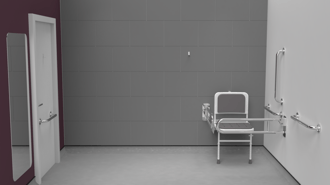
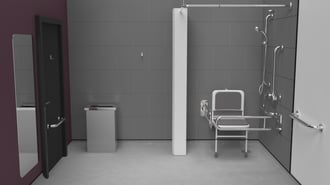
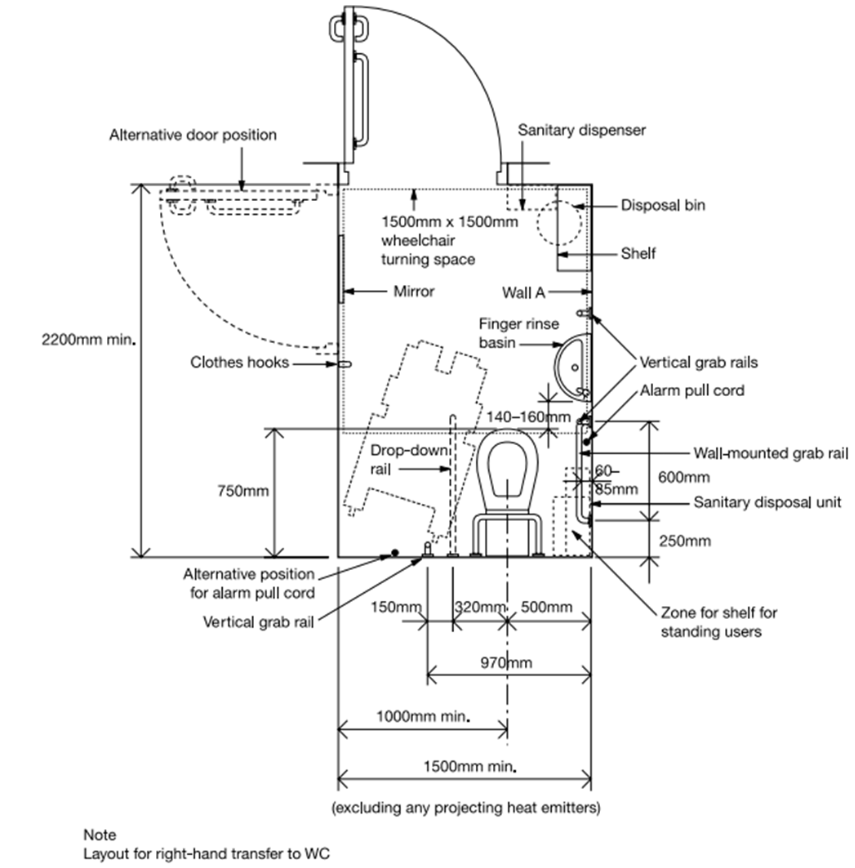
Imagine entering a washroom where every element feels intuitive. The door opens outward, giving you space to manoeuvre. There’s a clear turning circle - at least 1500mm x 1500mm - so you can rotate comfortably without feeling confined. This isn’t a luxury; it’s the baseline for independence.
Accessible design is about anticipating needs. From the height of a mirror to the placement of a grab rail, every millimetre matters. These details aren’t arbitrary, they’re guided by BS 8300 and Document M, the gold standards for inclusive environments.
Turning Space for Wheelchair Users
An accessible washroom must provide a clear turning circle of 1500mm x 1500mm, as shown in Approved Document M (Page 49). Referenced in the diagram below, this space allows wheelchair users to rotate freely without obstruction, ensuring smooth navigation and transfer. The turning area may overlap with other fixtures, provided the minimum dimensions are maintained.
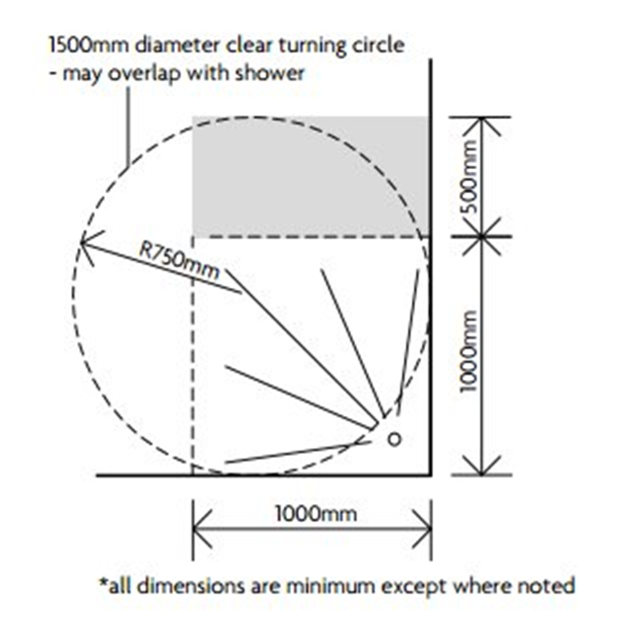
Relationship Between WC and Basin & Position of Lever Handle
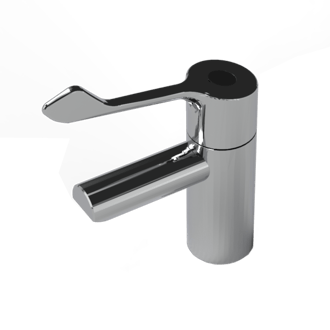
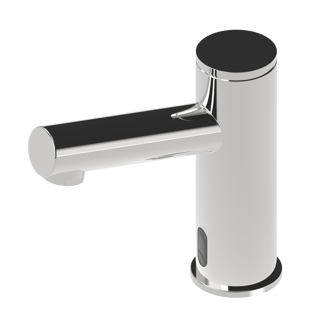
The relationship between the WC and basin is critical for user independence. The layout should allow a person to wash and dry their hands while seated on the WC, reducing the need for additional manoeuvring. This means the basin must be positioned within comfortable reach, with taps and accessories designed for easy operation. Two tap holes are recommended for flexibility, and the tap should be placed to avoid awkward angles.
For wheelchair-accessible WCs, the flushing mechanism must always be positioned on the open transfer side of the space, regardless of whether the layout is left- or right-handed. This ensures ease of use during transfer and aligns with Approved Document M (Page 52, Figure R). Lever handles should be intuitive and reachable without unnecessary stretching or twisting.
Accessible WC Area Essentials
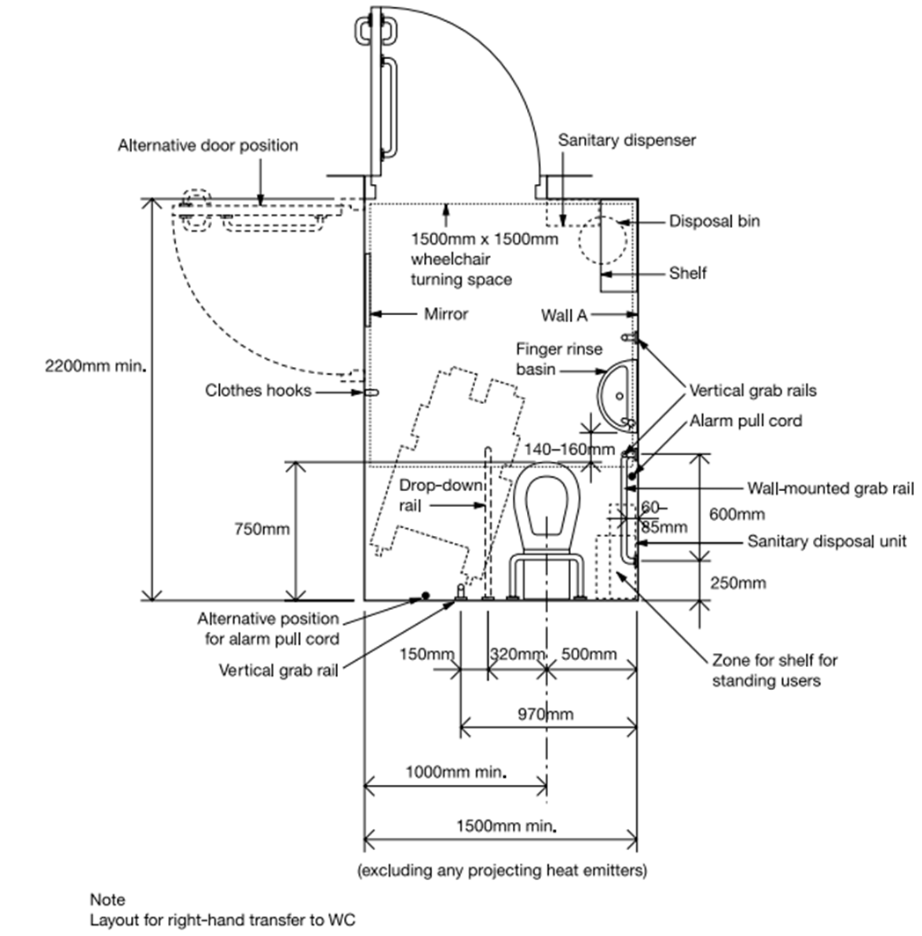
To meet best practice and BS 8300 standards, the following specifications should be observed:
- Turning circle: 1500mm diameter clear space
- Toilet height: 480mm to the top of the seat (average wheelchair height)
- Toilet projection: 750mm to the front edge (matching average wheelchair projection)
- Grab rails: Correct positioning and quantity for safe transfer
- Lever handle: Positioned on the open transfer side
- Basin: Two tap holes, with taps positioned for easy reach
- WC-to-basin relationship: Enables handwashing while seated
Grab Rails: Anchors of Stability
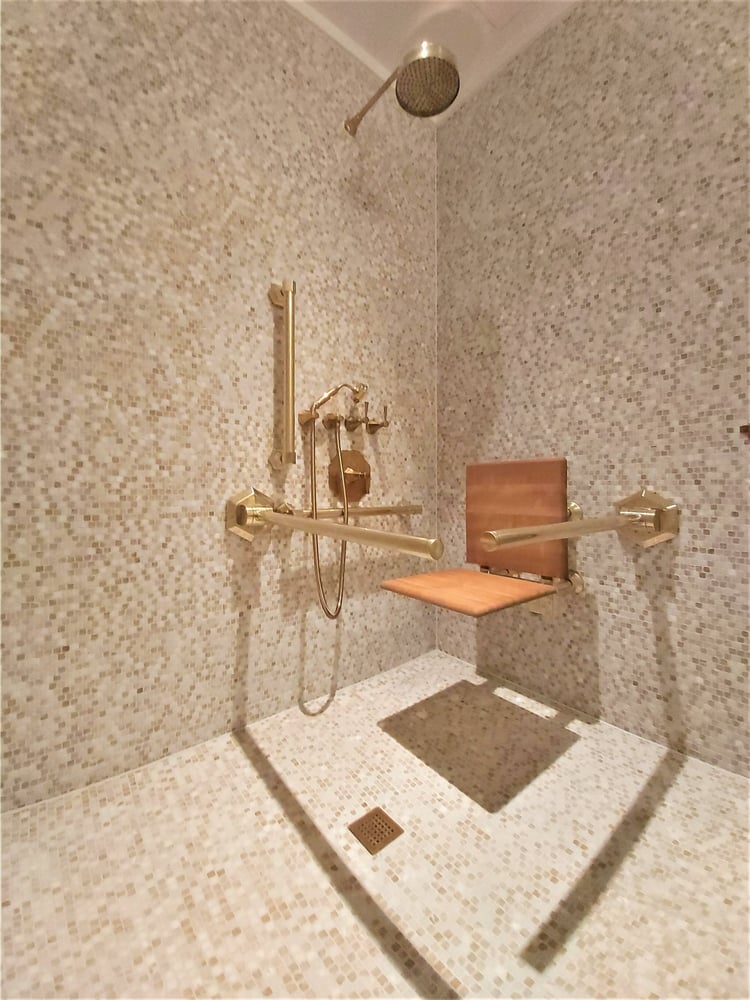
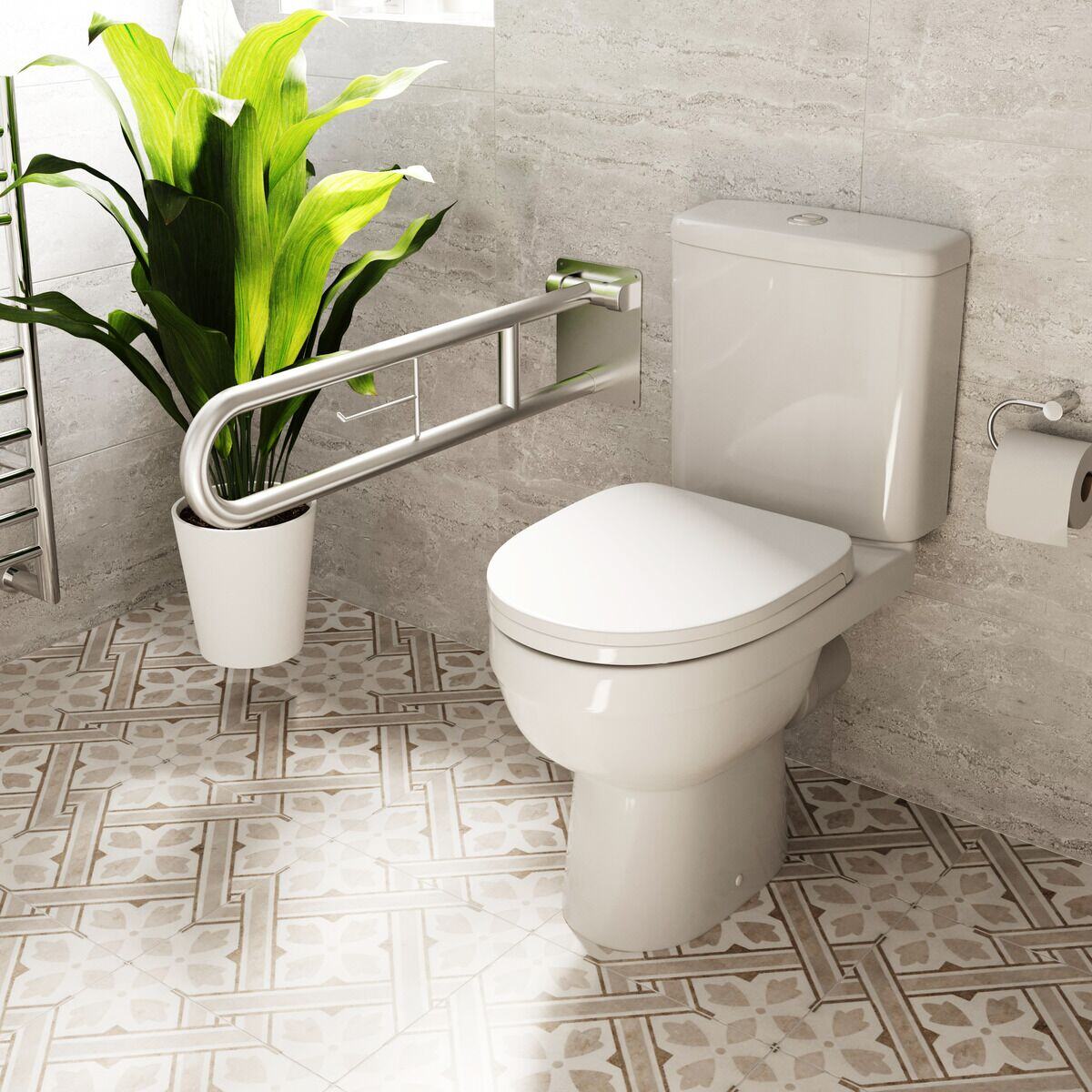
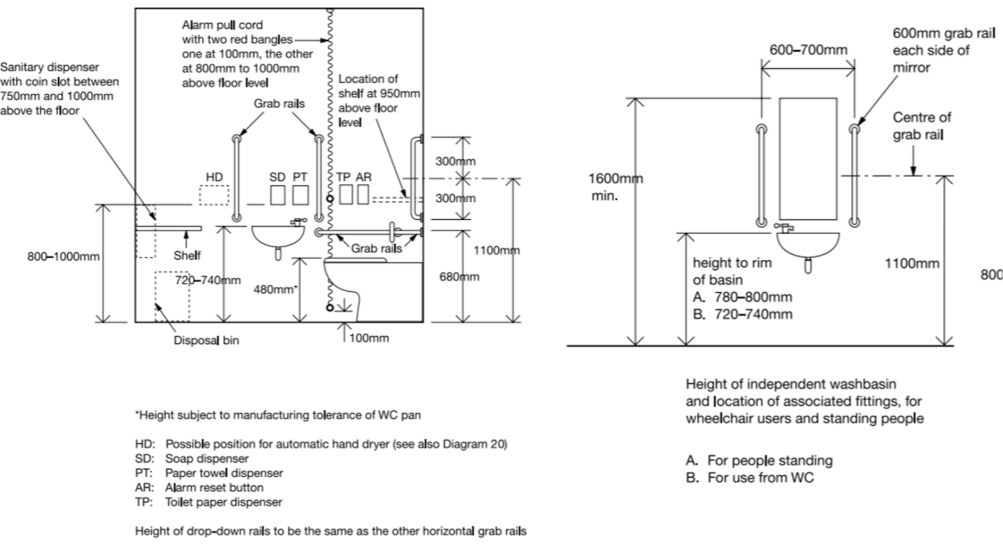
For many wheelchair users, transferring to and from the toilet is the most challenging part of the experience. Grab rails provide the support that makes this possible. According to BS 8300:
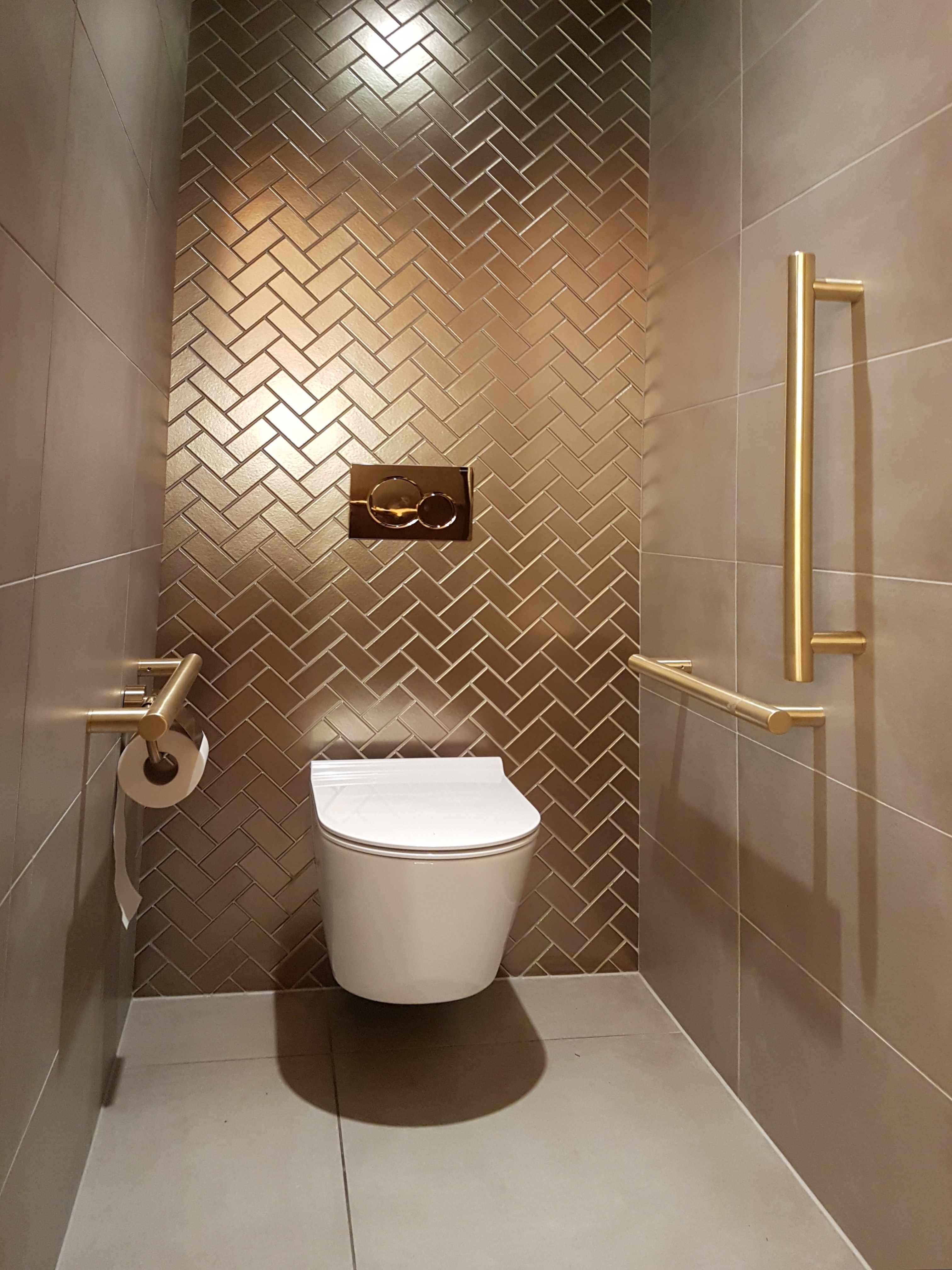
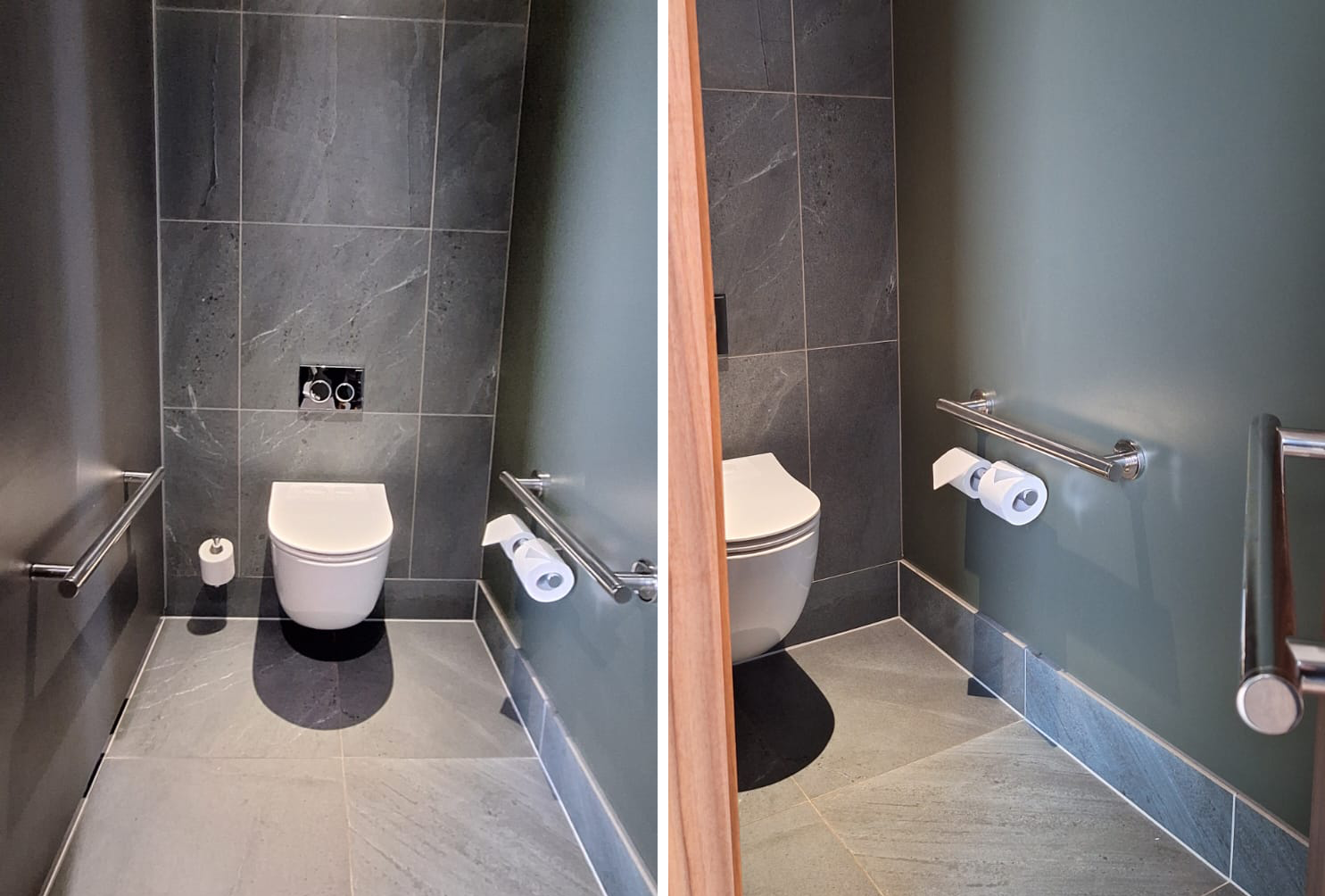
- Height: Horizontal grab rails should be installed between 700mm and 750mm from the floor, while vertical rails complement this for additional grip.
- Positioning: A 600mm rail beside the WC and a 700mm rail behind it create a secure transfer zone.
- Strength: Rails must be fixed to reinforced walls, capable of supporting significant weight without compromise.
These rails aren’t just functional, they’re lifelines for confidence and safety.
Turning Space for Wheelchair Users
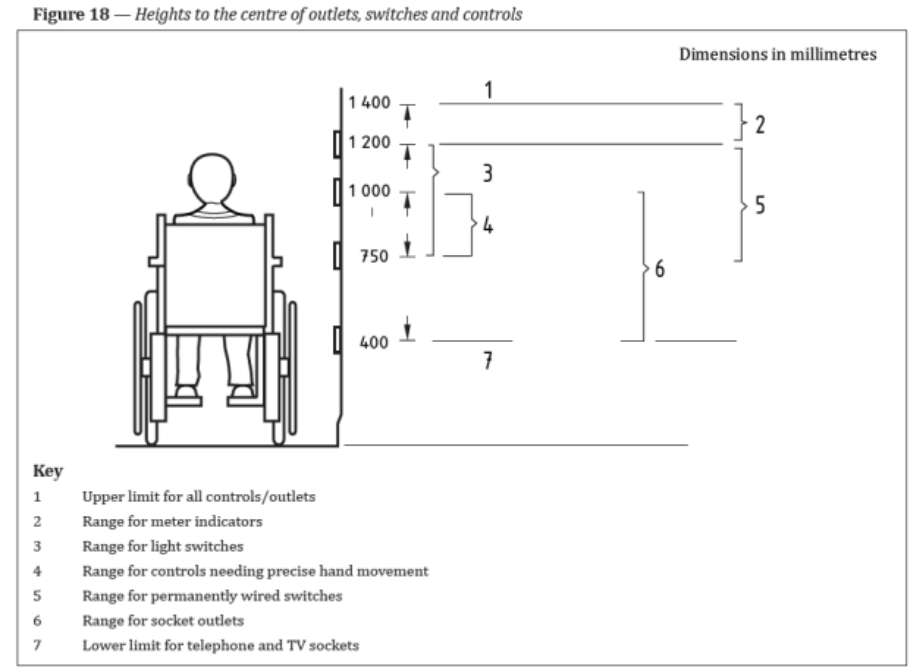
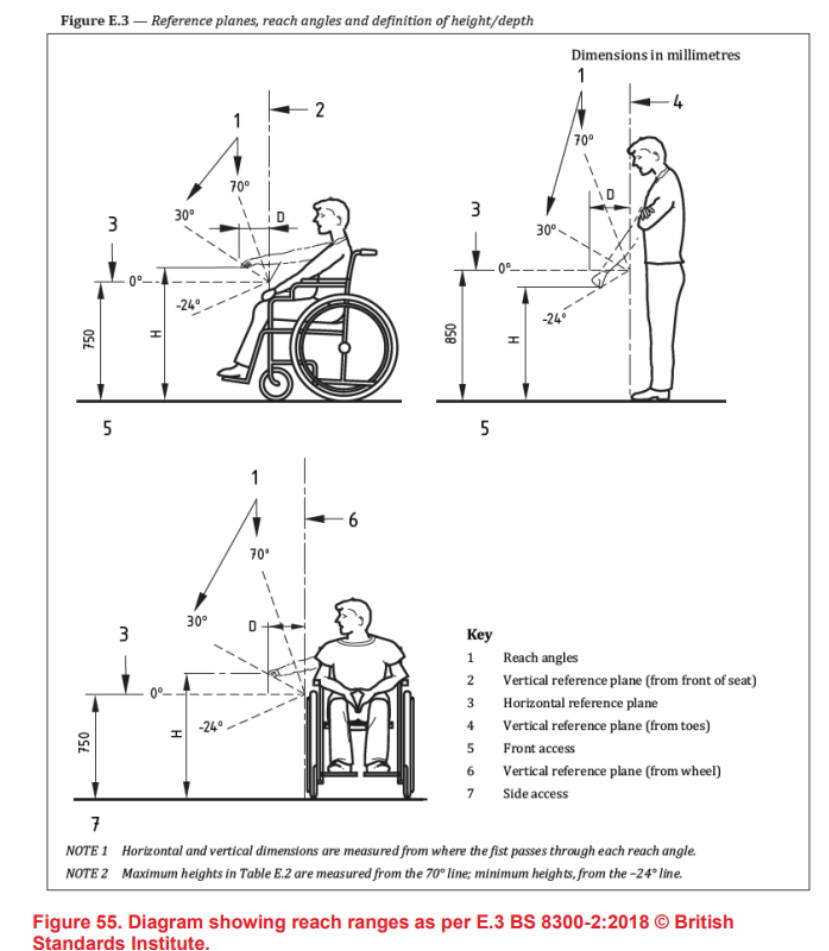
It sounds simple, but the placement of a toilet roll holder can make or break usability. Positioned below the side grab rail, at a height of 600–700mm, it should be reachable without stretching or twisting. Accessibility is about reducing effort, not adding it.
Mirrors: Reflecting Inclusivity
A mirror that only serves standing users is a missed opportunity. The bottom edge should sit no higher than 1000mm from the floor, ensuring visibility for those seated. Tilted mirrors can add flexibility, but the principle remains: design for everyone.
The Bigger Picture: Space and Flow
Beyond fixtures, the layout matters. A wheelchair-accessible washroom should offer:
- Clear transfer zones beside the WC.
- Outward-opening doors or sliding alternatives.
- Slip-resistant flooring for safety.
- Emergency pull cords within easy reach from the floor.
These elements combine to create a space that feels effortless, not restrictive.
Why It Matters
Accessible washrooms aren’t about ticking boxes, they’re about enabling independence. When design considers the lived experience of wheelchair users, it transforms a necessity into a statement of respect and care.
At Fitzroy, we champion this philosophy in every project. Because true luxury is inclusivity.
Room Checklist Guide (BS 8300 Essentials)
✔ Turning circle: 1500mm x 1500mm
✔ Horizontal grab rail: 700–750mm from floor
✔ Vertical grab rail: Adjacent to WC for support
✔ Toilet roll holder: 600–700mm height, below side rail
✔ Mirror: Bottom edge ≤1000mm from floor
✔ Emergency pull cord: Reachable from floor
✔ Door: Outward opening or sliding
✔ Slip-resistant flooring
Need Support with Specification?
At Fitzroy, we’re here to help you with detailed specifications for your projects. Our team offers expert guidance to ensure your designs meet the highest standards.
We also provide a RIBA Approved CPD, giving architects and designers the opportunity to expand their knowledge and stay ahead in the industry.
Contact us today to learn more or book your CPD session.